
If you want an app to help you drink less, the biggest difference is not how many features each app has. It is when and how the app tries to help you.
Some apps are designed around structured programs and daily coaching. Others focus on detailed alcohol records. Some are built around challenges such as Dry January. Modero takes a lighter approach: decide what you want before drinking, log drinks quickly during the evening, and keep that decision visible as the night continues.
This is a fit guide, not an independent lab ranking. Modero is our product, so we have an obvious interest in it and list it first. Information about the other apps was checked against their official websites and App Store listings in August 2026. Features and pricing can change, so check the current product page before subscribing.
1. Modero — best for simple in-the-moment drink tracking
Modero is built around a fairly narrow problem: you can know how much you want to drink before the evening starts and still lose sight of that decision later.
Instead of asking you to complete lessons or maintain a detailed drinking diary, Modero keeps the basic interaction short. You can set a plan for tonight, log a drink with a tap, see your current count against the plan, and use a pace cue to make the progression of the evening more visible.
It also keeps longer-term history, so the same quick logging creates weekly and monthly patterns without requiring a separate journal entry after every night out.
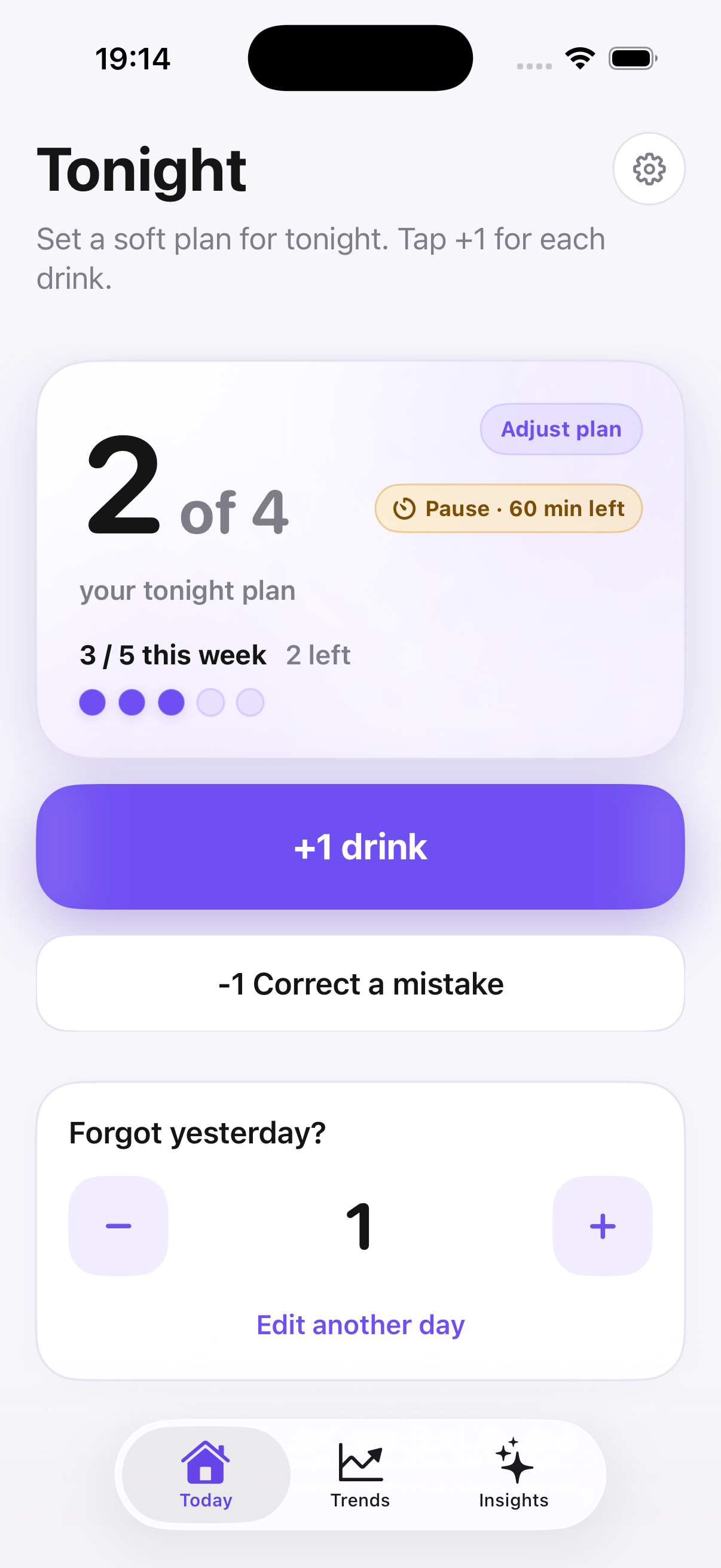
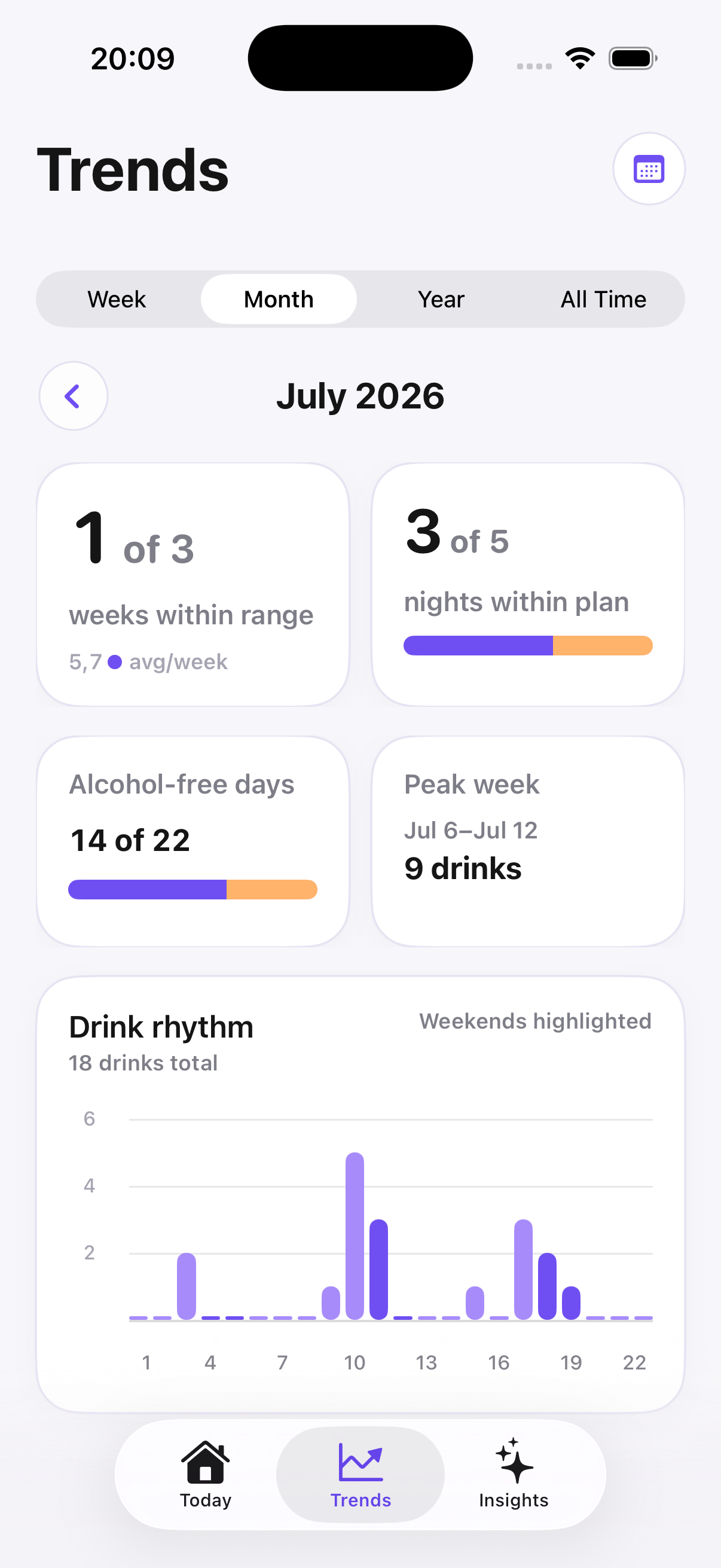
The app also includes Apple Watch support, trends and optional Apple Health integration. The emphasis, however, is deliberately on keeping the live experience simple rather than building a large coaching or education platform around it.
What Modero does well
It is fast to use in situations where opening an app already feels like friction. If you are at dinner, at a bar or talking with friends, logging a drink should take less attention than describing the drink in detail.
The tonight plan also creates a useful distinction between what you decided earlier and what actually happened. That can reveal something a simple retrospective drink counter cannot.
What to know before choosing it
Modero is not designed for people looking for a course, human coaching, a community or a recovery program. It also intentionally avoids highly detailed ABV, calorie and spending entry.
Best for: someone who still drinks and wants a lightweight way to plan, count and notice when the evening starts moving beyond the number they originally chose.
Price: $2.99 per month after a 14-day free trial.
2. Sunnyside — best for guided moderation and accountability
Sunnyside takes a more structured approach. Rather than functioning mainly as a counter, it combines drink tracking with weekly planning, reminders, accountability and coaching-oriented support.
The basic idea is to plan drinking and alcohol-free days ahead of time, record what actually happens, and use that information to adjust future weeks.
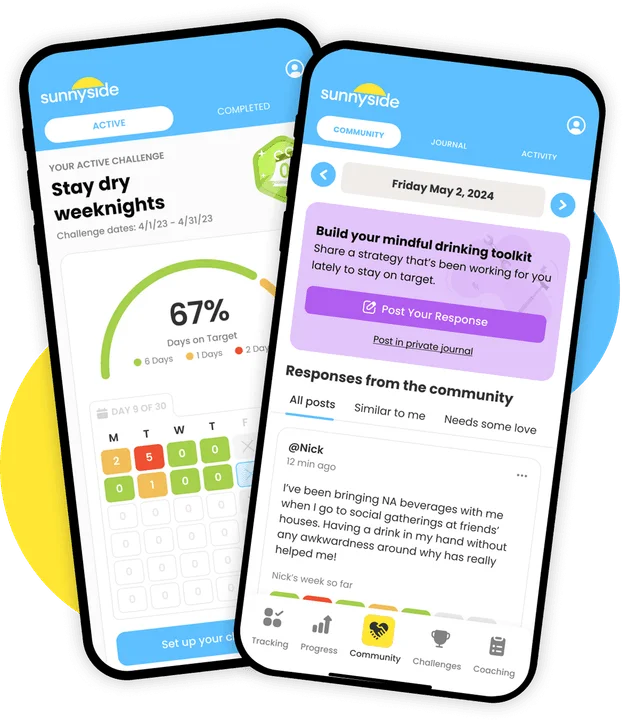
Sunnyside is a stronger fit than a minimalist tracker if the thing you want from an app is regular external structure. Its product ecosystem includes accountability messages, progress information and community/support elements, with higher-tier services providing more coaching.
At the time of this review, Sunnyside advertised its Basic membership at $99 per year, equivalent to $8.25 per month when billed annually, with a 15-day trial. Pricing and available plans can change.
What Sunnyside does well
The weekly planning model makes sense for people who want to think about their drinking before each individual night begins. Instead of only recording drinks after the fact, the app encourages a broader weekly intention.
It can also provide considerably more support than a standalone alcohol counter.
What to know before choosing it
That additional structure is also the trade-off. Someone looking for a private tool that can be opened, tapped once and closed may find a coaching-oriented program more involved than necessary.
Best for: someone who wants to drink less with regular planning, accountability and ongoing guidance rather than only tracking drinks.
3. Reframe — best for a structured behavior-change program
Reframe is substantially more than a drink tracking app. It is built around a longer-form behavior-change experience that combines education, daily activities, progress tracking, community features and optional coaching.
Its core program includes a structured sequence of educational material intended to help users understand drinking patterns and build different habits over time.
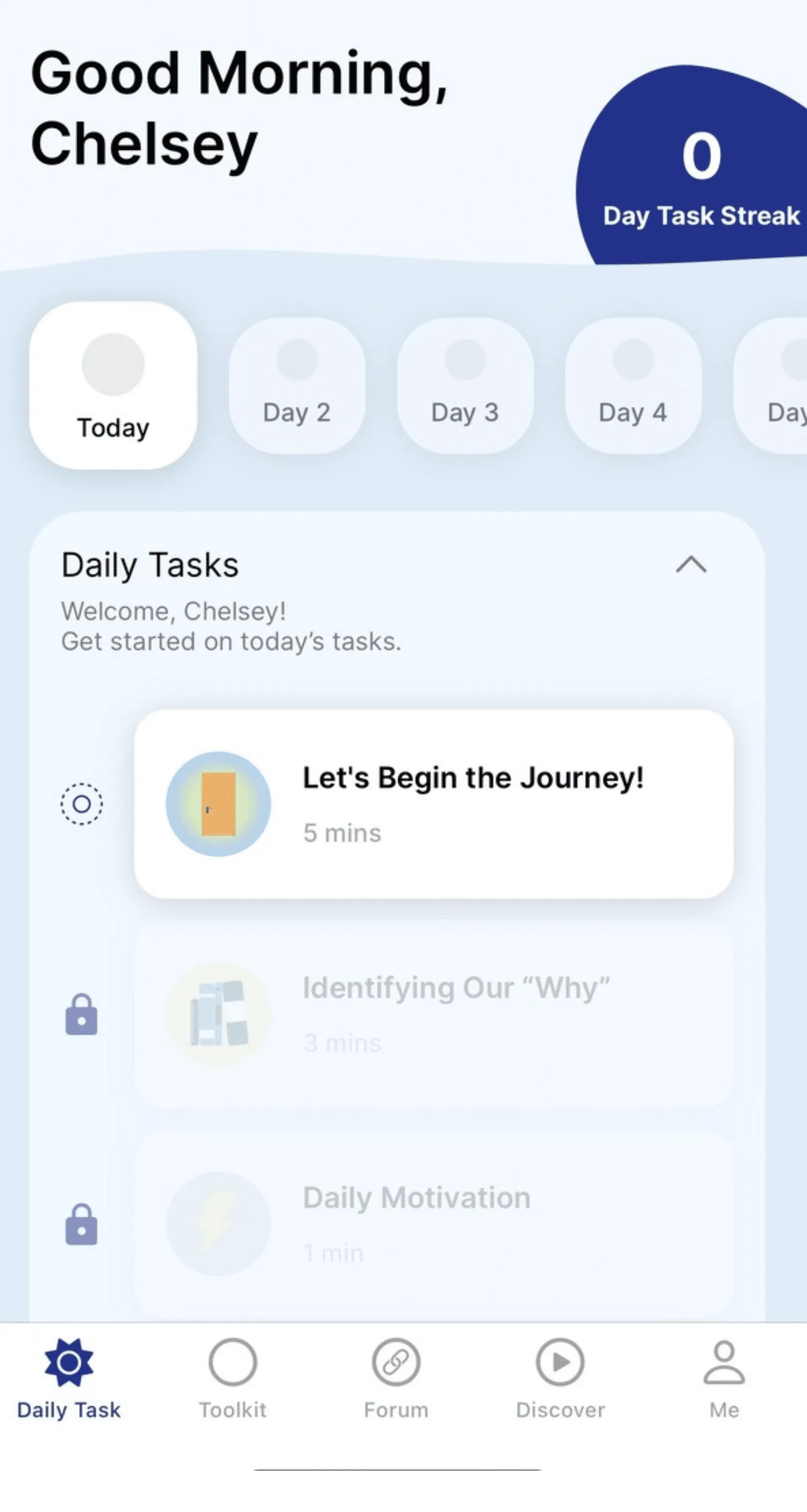
This makes Reframe quite different from Modero or DrinkControl. The main product is not simply the act of counting a drink. Tracking is part of a broader program.
Reframe also supports Apple Watch, and its ecosystem includes check-ins, exercises and community-oriented features.
What Reframe does well
If you actively want to spend time learning about your relationship with alcohol, completing daily material and following a structured program, Reframe offers much more depth than a simple tracker.
Its educational layer is arguably the main reason to choose it.
What to know before choosing it
The same depth creates more commitment. If your actual problem is simply, “I planned two drinks, but after the second one I stop thinking about the plan,” opening a large behavior-change program may be more intervention than you want.
Reframe is subscription-based. At the time of this review, its U.S. membership page showed $79.99 per year or $13.99 per month, while Reframe's pricing documentation notes that personalized offers can vary.
Best for: someone who wants an educational program and ongoing behavior-change framework, not merely an alcohol counter.
Price: from $79.99 per year in the U.S. at the time of review; a $13.99 monthly option was also advertised. Offers may vary.
4. DrinkControl — best for detailed alcohol tracking and statistics
DrinkControl is the strongest fit in this group for someone who genuinely enjoys detailed tracking.
It can record alcohol in standard units, calories and spending, and turn that information into calendars, charts and longer-term statistics.
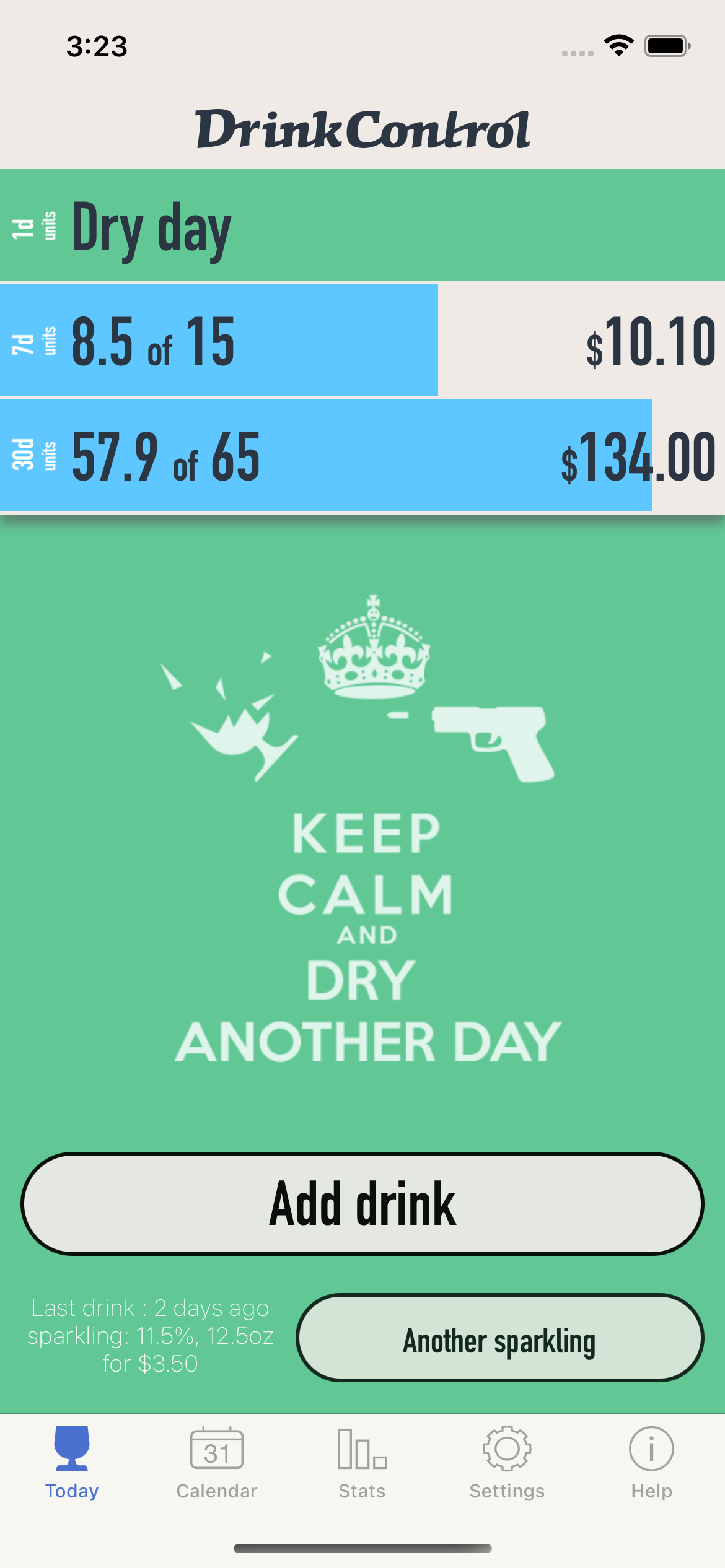
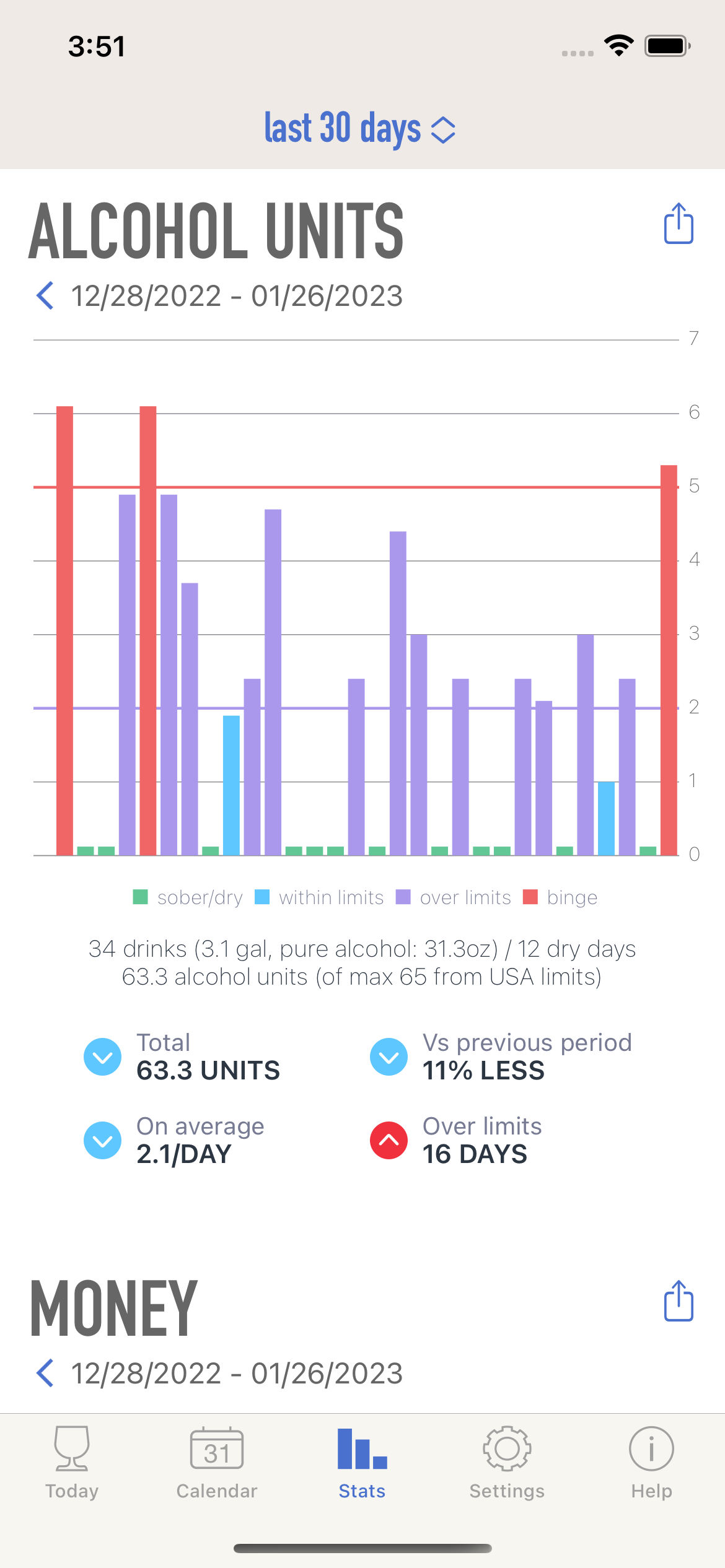
That makes it useful when your main question is not simply “How many drinks have I had tonight?” but also “How much alcohol was that actually?”, “How many calories did I drink?”, “How much did I spend?” or “How has this changed over several months?”
DrinkControl also supports exports, widgets and Apple Health integration. According to the developer, drinking data is stored on the device, giving it a meaningful privacy advantage compared with cloud-first tracking services.
What DrinkControl does well
Its strength is measurement. Someone who likes detailed numbers can learn considerably more from DrinkControl than from a minimalist counter.
The calendar and charting tools also make it easier to inspect longer-term patterns after enough data has accumulated.
What to know before choosing it
More detail means more input. Recording the type, strength, volume or other information about a drink can be valuable, but it requires more effort at the exact moment when you may not want to interact with your phone.
It also does not center the experience around a simple tonight plan and live pace cue in the way Modero does.
Best for: someone who wants a detailed drinking diary with units, calories, cost and statistics.
Price: free download. DrinkControl Premium was $3.99 per month or $11.99 per year in the U.S. App Store at the time of review.
Which drink less app is best for you?
The best choice depends less on the number of features and more on what you want the app to do when drinking actually happens.
| App | Best for | Drink tracking | Planning / goals | Coaching or program | Apple Watch | Price |
|---|---|---|---|---|---|---|
| Modero | Simple in-the-moment tracking | Yes | Tonight plan + weekly range | No | Yes | $2.99/month after a 14-day trial |
| Sunnyside | Guided moderation and accountability | Yes | Weekly planning | Yes | — | Basic plan $99/year at time of review; 15-day trial |
| Reframe | Structured behavior-change program | Yes | Goals and check-ins | Yes | Yes | From $79.99/year; monthly option $13.99 |
| DrinkControl | Detailed alcohol statistics | Yes | Limits and tracking goals | No | — | Free download; Premium $3.99/month or $11.99/year |
Choose Modero if the main problem happens during the evening: you already decided what you wanted to drink, but that number becomes easy to forget after the night gets going.
Choose Sunnyside if you want more structure around the week, with planning, accountability and ongoing guidance.
Choose Reframe if you want a larger educational and behavior-change program rather than primarily a drink tracker.
Choose DrinkControl if detailed measurement matters most to you: alcohol units, calories, spending, charts and longer-term statistics.
There is no universal winner. The useful question is whether you need a live decision aid, accountability, a structured program or detailed measurement.
Drink tracking and drinking less are not quite the same job
One reason these apps feel so different is that recording alcohol and changing what happens next are separate problems.
A detailed drinking diary can tell you exactly what happened last month. That can be valuable. But it may not affect the point in an evening when another drink becomes the automatic next step.
A coaching program approaches the problem differently. Instead of intervening mainly during an individual night, it tries to change habits over a longer period through planning, education and accountability.
A live tracker sits somewhere else again. Its job is not necessarily to teach you more. Its job can simply be to make information you already knew earlier in the evening visible again.
That distinction matters when comparing apps. The best alcohol tracker on paper is not automatically the best app to help you drink less.
What to check before paying for a drink less app
Before starting a subscription, try to picture an ordinary drinking situation rather than your most motivated day.
Can you log a drink quickly enough that you will actually do it?
Can you see the information you care about without digging through several screens?
If you want a plan, is that plan visible while you are drinking?
If you want detailed statistics, does the app record enough information to make those statistics meaningful?
If you want coaching, are you genuinely going to use the coaching rather than paying for a feature you ignore?
And if privacy matters to you, check how the app stores and processes your drinking data.
The right answer can be different for different people because these products are solving different versions of the same broad problem.
Try the app in the situation that made you search for one
A feature comparison can narrow the list, but the final test is mundane: use the app on a normal night.
If you usually lose track at dinner, try logging drinks during dinner. If weekends are the problem, use it on Friday and Saturday rather than testing it on a quiet Tuesday. If your goal is to understand patterns, keep enough data for those patterns to become meaningful.
After a week or two, ask a more useful question than “Which app has the most features?”
Ask:
Did I actually use it at the moment I needed it?
An app that records twenty variables but stays unopened is not necessarily more useful than one that records three things you consistently notice.
For more on the difference between recording drinks and changing what happens during an evening, read why counting drinks is not always enough on its own.
If you are deciding whether an app is worth using at all, our alcohol tracker app versus spreadsheet comparison looks at the trade-offs between dedicated tracking and keeping your own record.